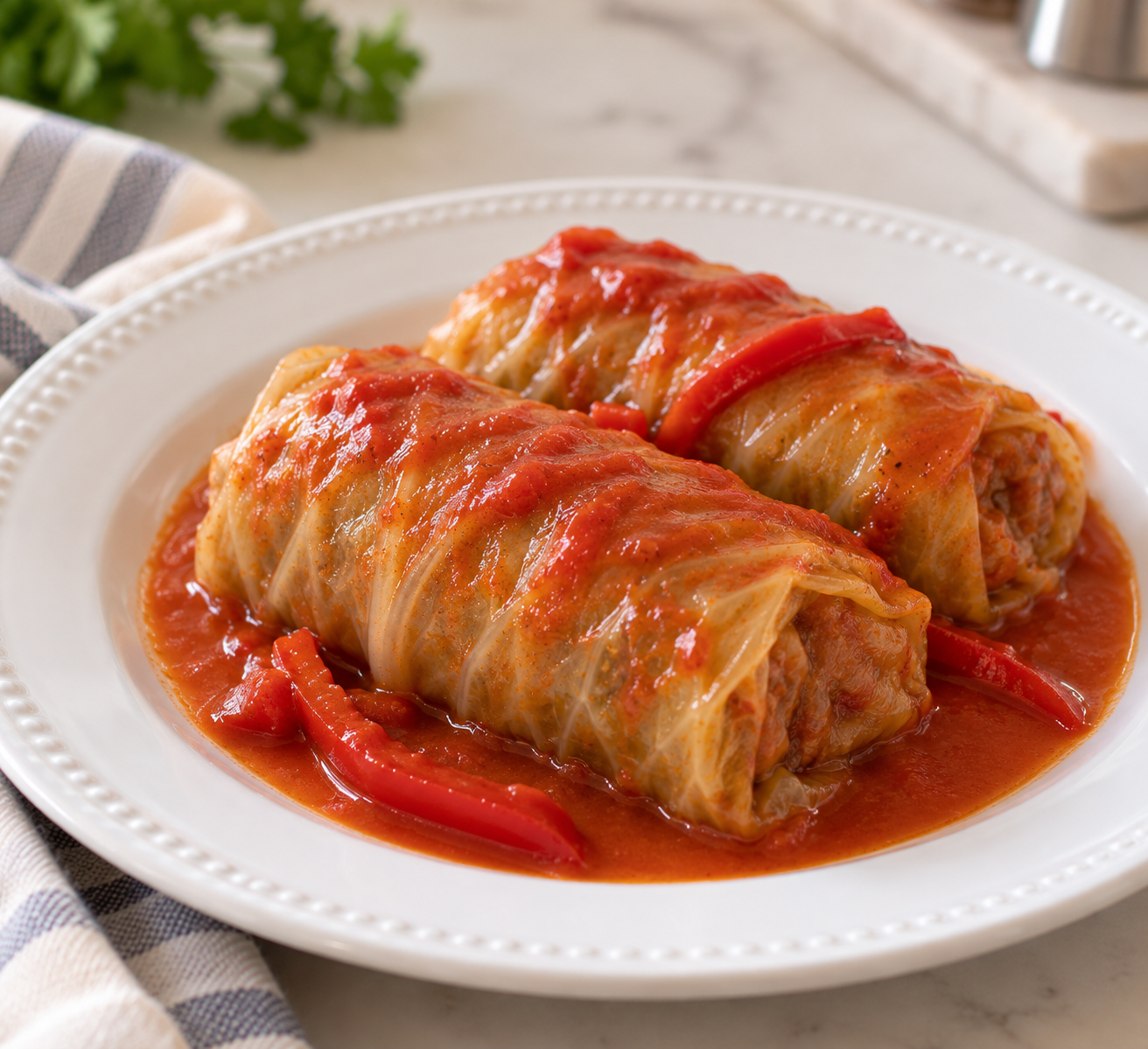
Our Family Large-Batch Cabbage Rolls
Make them once, fill the freezer, and make dinner easier later.
Cabbage rolls are another recipe I learned from my mother-in-law, and when I make them, I make a lot.
They take a little time to prepare, so if I’m already cooking the rice, softening the cabbage and rolling them one by one, I like to make enough for dinner and put a few pans in the freezer for later.
Over the years, I learned to make them myself, and this is one of those recipes I now make mostly by feel. I know what the rice should look like, how soft the cabbage needs to be and about how much filling belongs in each leaf.
So when I decided it was finally time to write the recipe down, I made them the way I always do and paid attention to the little details along the way.
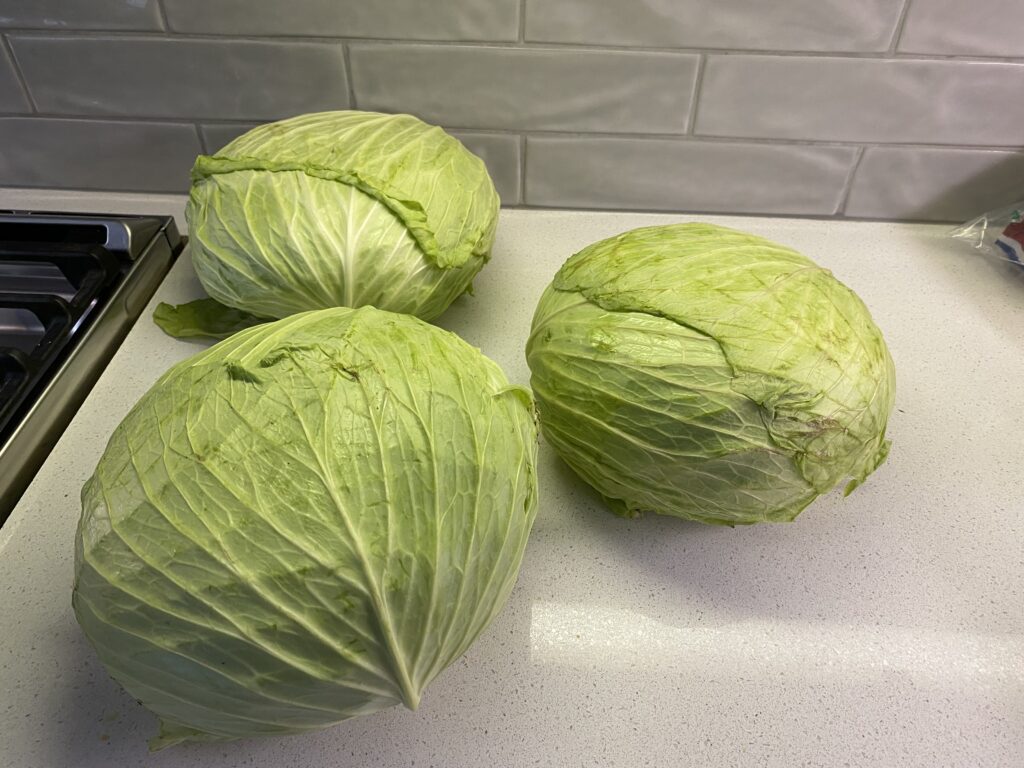
This batch started with beautiful, locally grown cabbage from the farmers’ market. Cabbage is in season, which makes it the perfect time to spend an afternoon making a big batch and stocking the freezer.
Like so many of the recipes that came from my mother-in-law’s kitchen, these use simple ingredients and Our Family Pasta Sauce. It’s the kind of cooking that has become part of the way I cook for my own family now too.
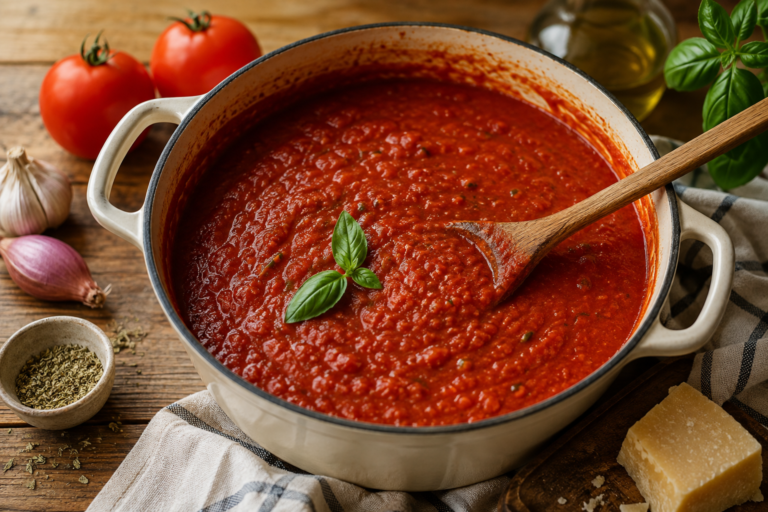
It Starts With Our Family Pasta Sauce
This is another recipe that uses Our Family Pasta Sauce.
For cabbage rolls, though, there’s one important difference: the sauce needs to be thinned quite a bit with water before it goes into the pan.
The cabbage rolls absorb some of that liquid as they cook, helping both the cabbage and filling become incredibly tender.
What You’ll Need
For the Rice
- 750 g Arborio rice
- 1 medium onion, finely chopped
- About 6 large garlic cloves, or to taste
- A few tablespoons olive oil
- About 4 chicken bouillon cubes
- Water, as needed
For the Filling
- 7 lb (3.2 kg) ground pork
- Cooked and cooled Arborio rice
- About ¾ cup Our Family Pasta Sauce
- About 3 chicken bouillon cubes
- Plenty of freshly ground black pepper
- Salt, to taste
You’re looking for approximately a 50/50 balance of cooked rice and pork, but don’t worry about making it exact. Adjust it to what your family prefers.
For Assembling
- About 2 large heads green cabbage
- About 2 jars Our Family Pasta Sauce
- Water, for thinning the sauce
- Red bell pepper, thinly sliced
Yield: About 30 generously sized cabbage rolls. Your yield will vary depending on the size of the cabbage leaves and how much filling you use.
1. Prepare the Rice
Finely chop the onion and sauté it in a few tablespoons of olive oil until softened.
Add the garlic and sauté briefly.
Add the Arborio rice and cook for another few minutes, stirring it through the onion, garlic and olive oil.
Dissolve about 4 chicken bouillon cubes in water and add enough to cover the rice.
Cover and simmer over low heat, stirring occasionally. As the liquid is absorbed, add more water as needed until the rice is tender.
Remove from the heat and allow the rice to cool completely before combining it with the raw pork.
2. Prepare the Cabbage
Fill a very large pot approximately halfway with water and bring it to a boil. Don’t fill it too high because the cabbage will raise the water level considerably.
Remove the rough outer leaves and cut the core from the bottom of the cabbage.
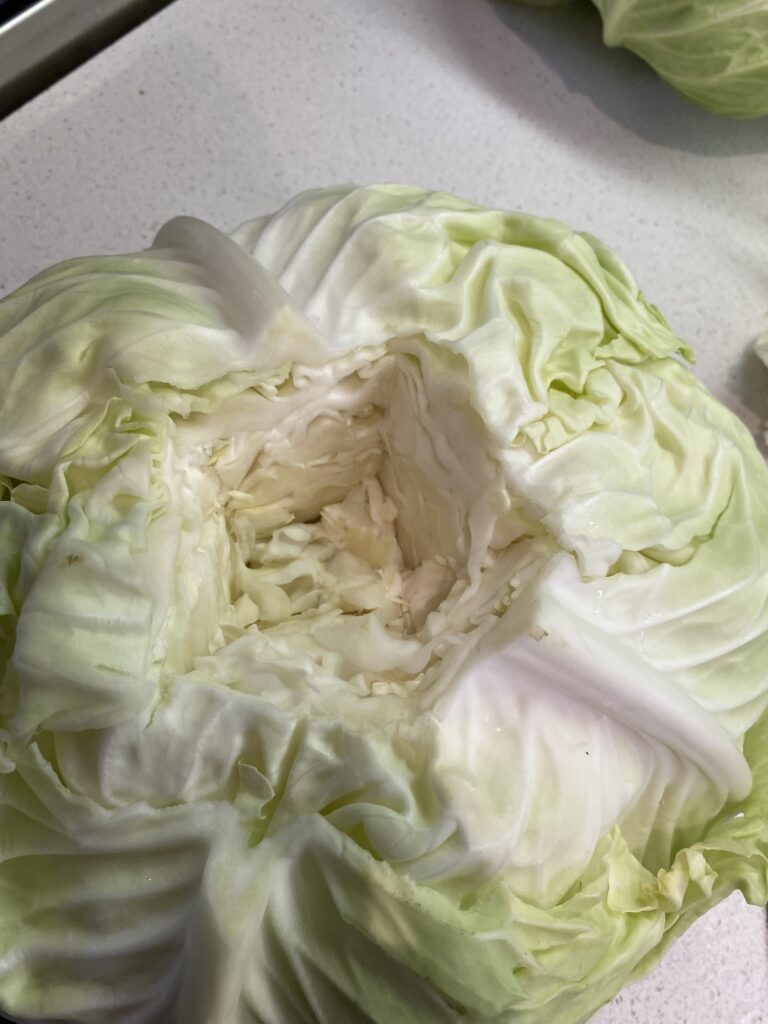
Carefully place the cabbage in the hot water.
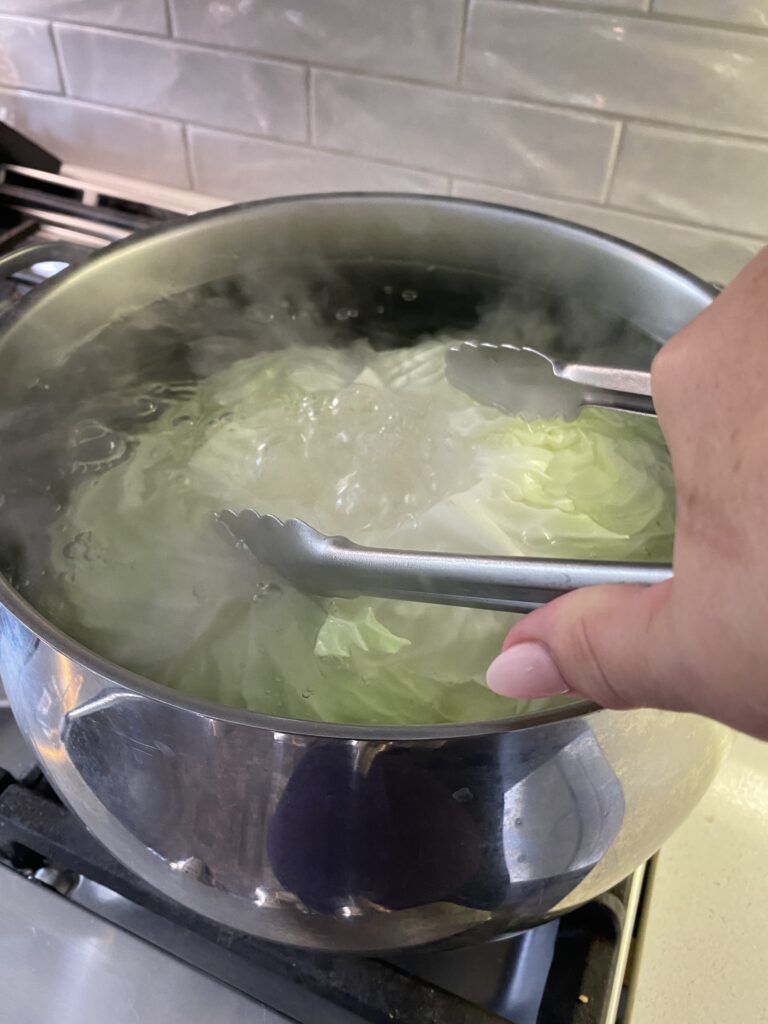
Use tongs to push the cabbage down so the water can get inside the opening where the core was removed and work its way between the leaves.
As the individual leaves begin to loosen, gently remove them with the tongs and place them on a large tray or pan.
Don’t cook the cabbage. You’re only trying to soften the leaves enough that they release easily from the head and become flexible enough to roll.
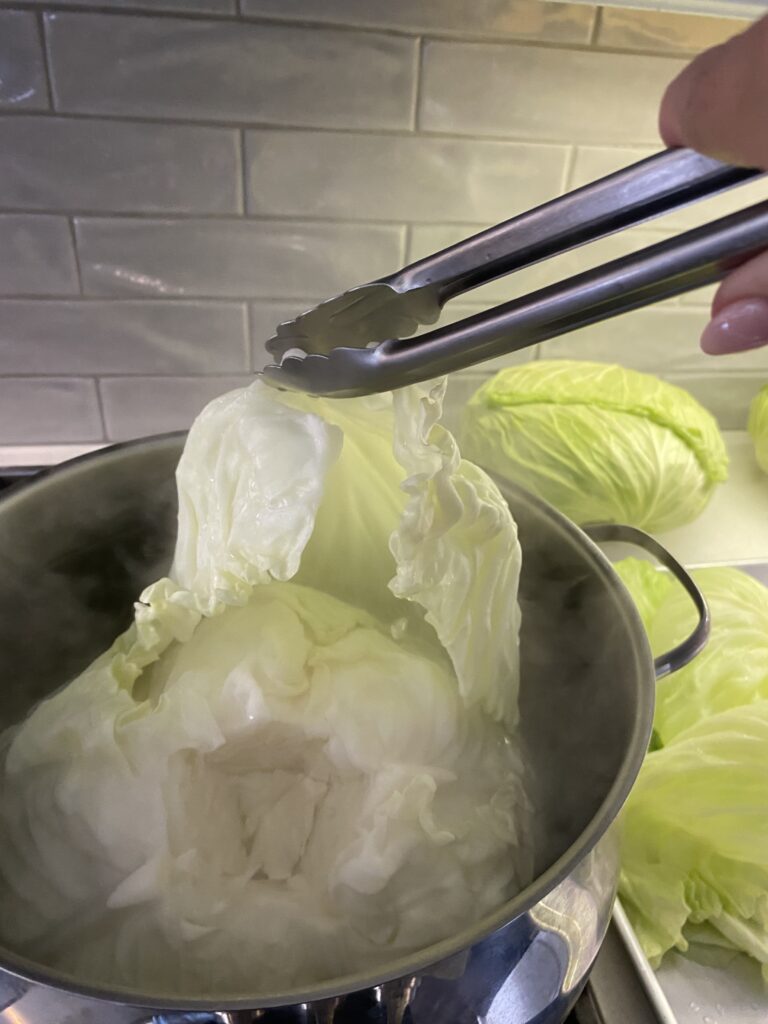
My large cabbages took approximately 10 minutes per head.
3. Trim the Thick Rib
Once the leaves are cool enough to handle, use a sharp knife to carefully shave down the thick centre rib at the bottom of each leaf.
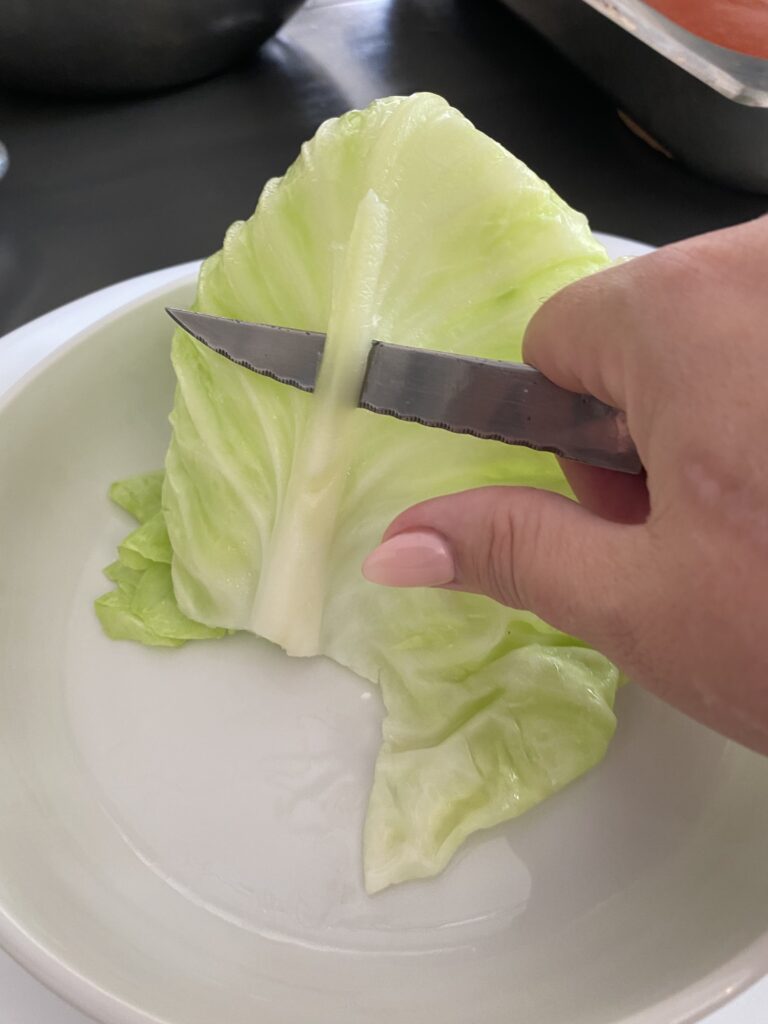
Don’t cut through the leaf or remove the rib completely. You’re simply taking away some of the thickness so the leaf folds and rolls more easily.
It’s a small step, but it makes rolling much easier.
4. Make the Filling
Place the ground pork in a very large bowl or food-safe container.
Add enough cooled Arborio rice to give you approximately a 50/50 pork-and-rice mixture.
In a small bowl, combine about ¾ cup of Our Family Pasta Sauce with 3 chicken bouillon cubes, stirring until the bouillon dissolves.
Add the sauce mixture to the pork and rice.
Season with plenty of freshly ground black pepper and salt to taste, then mix thoroughly.
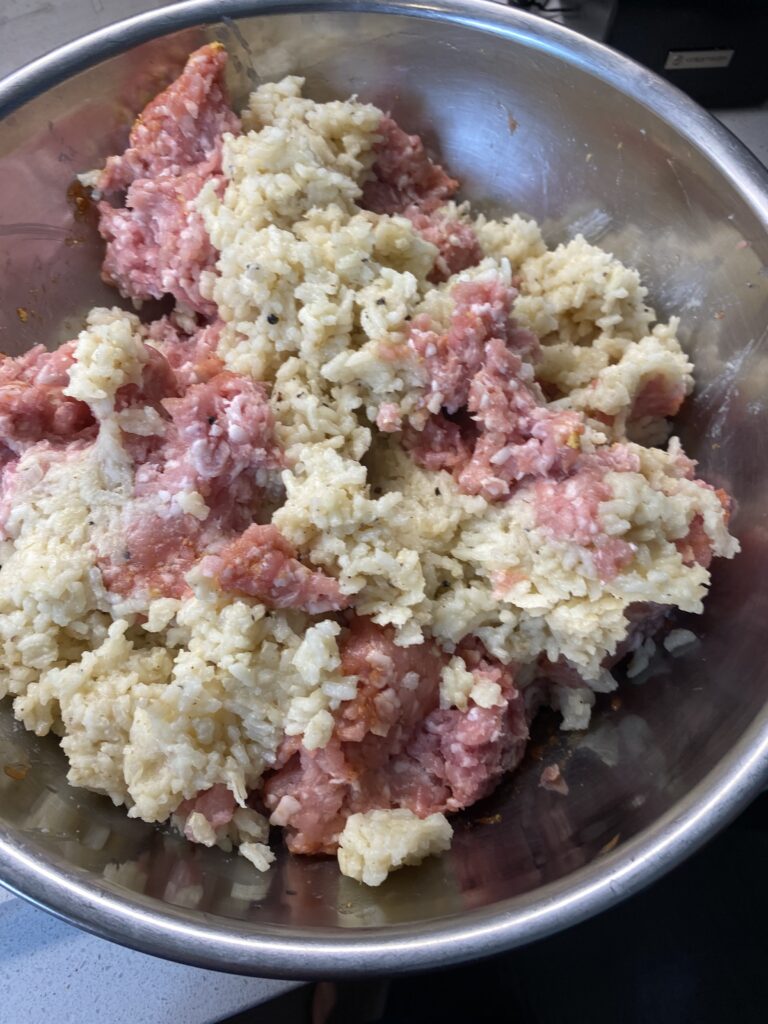
Taste Before You Roll
Before committing to an entire batch, take about 1 tablespoon of the filling and fry it in a small pan until completely cooked.
Taste it and adjust the salt, pepper or other seasoning if you want to.
I keep ours fairly simple, but this is an easy way to get the seasoning just right.
5. Fill, Fold & Roll
Lay one prepared cabbage leaf flat and place a generous mound of filling toward the bottom.
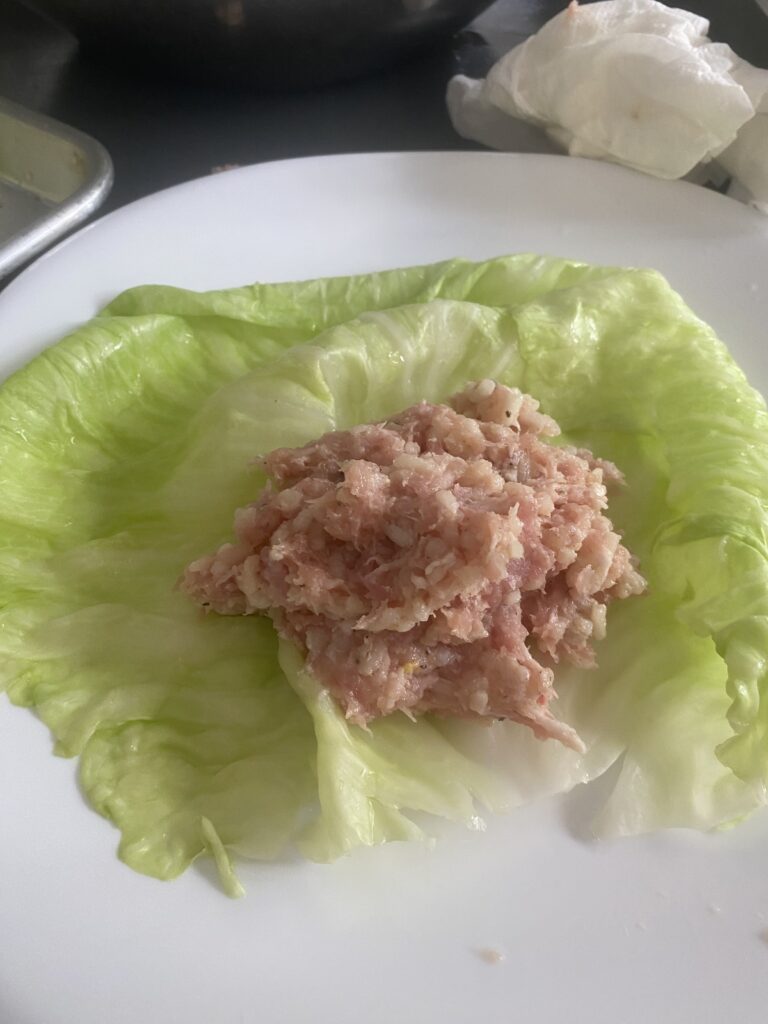
Bring the bottom of the cabbage leaf up and over the filling.
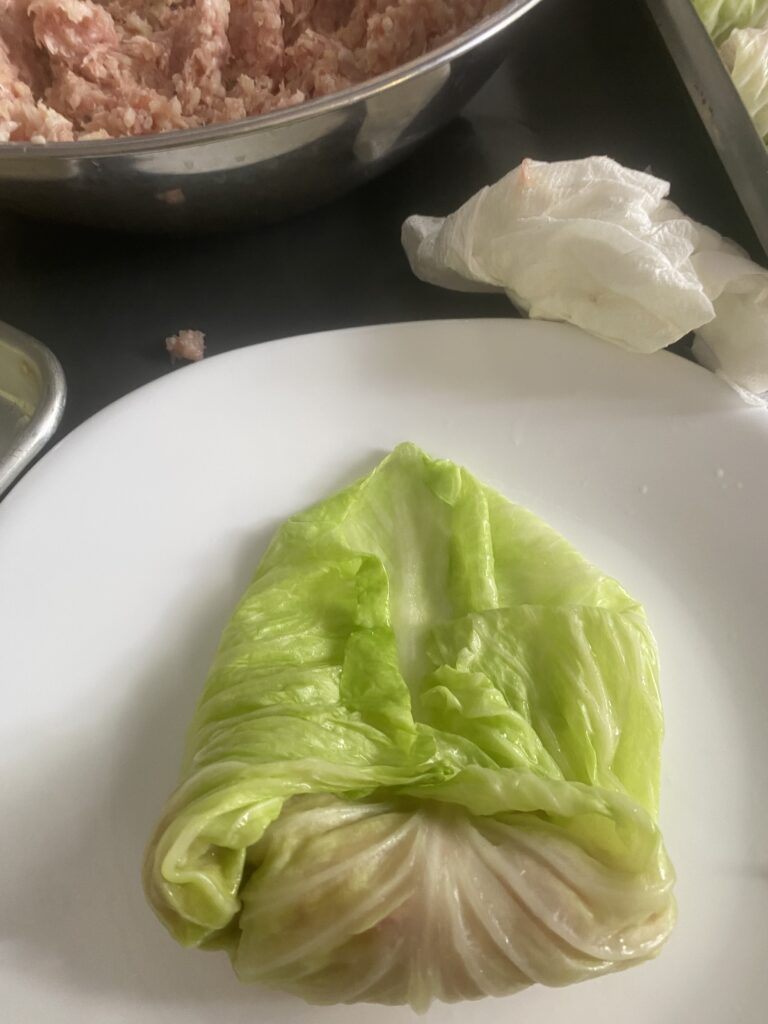
Fold both sides inward, then continue rolling until the filling is completely enclosed.
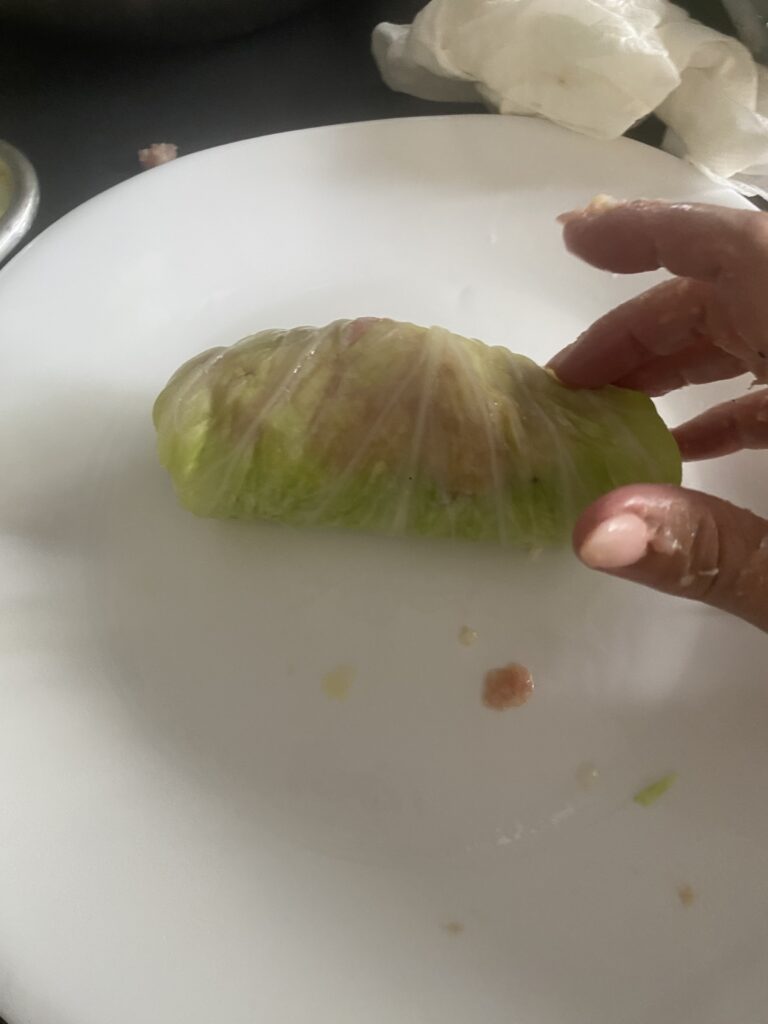
Flip, Roll & Fold
The amount of filling will depend on the size of the leaf and how large you like your cabbage rolls. Mine tend to be fairly generous.
6. Thin the Sauce
Dilute Our Family Pasta Sauce quite generously with water.
It should look much thinner and more watery than sauce you would normally serve over pasta.
That’s intentional.
The cabbage rolls absorb some of that liquid during the long cooking time, which is part of what makes them so tender.
7. Assemble the Pan
Use a glass or metal baking pan sized appropriately for the number of cabbage rolls you’re making.
Spread some of the diluted sauce over the bottom of the pan.
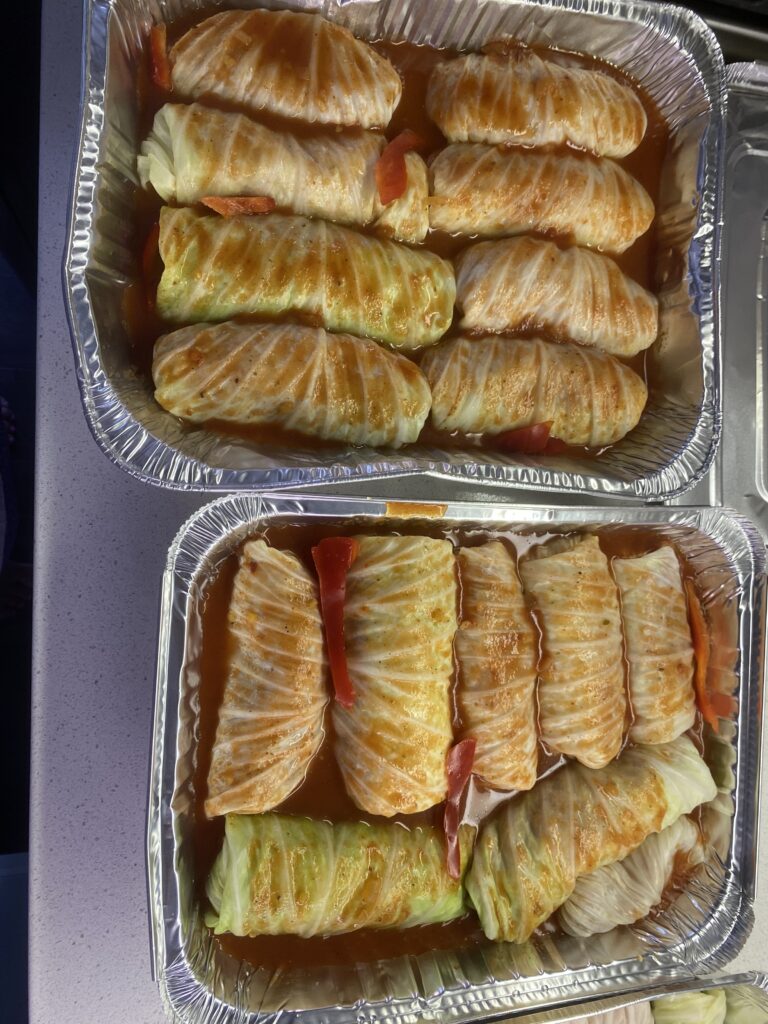
Arrange the cabbage rolls with a little room around them. They can be snug, but don’t pack them too tightly. Tightly packed rolls can take longer to cook and are more difficult to serve from the pan.
Pour additional diluted sauce over the cabbage rolls.
You want the rolls sitting in sauce, but not swimming in it.
Add about 4–5 thin slices of red bell pepper per pan, or less to taste. The pepper gently flavours the sauce as everything cooks.
Cover the cabbage rolls with some of the leftover or smaller cabbage leaves.
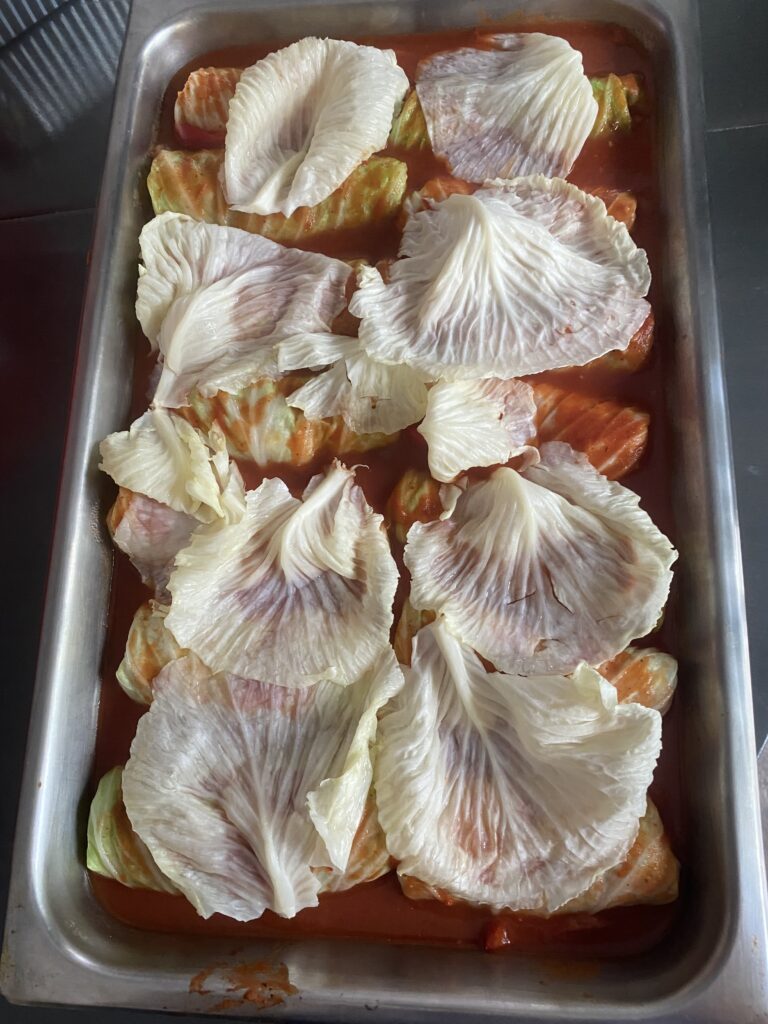
I usually discard those top leaves after cooking, but if someone likes the extra cabbage, there’s no reason not to eat them.
Cover the entire pan tightly with foil.
8. Bake Until Very Tender
Bake covered at 400°F for approximately 2–3 hours.
Cooking time will vary depending on the size of your cabbage rolls, how many are in the pan and how closely they’re arranged.
You’re looking for very tender cabbage and thoroughly cooked filling.
Ground pork should reach at least 160°F (71°C). For these cabbage rolls, however, that’s the food-safety minimum rather than necessarily the finished texture you’re looking for. The longer, covered cooking time in the thinned sauce is what makes them exceptionally tender.
My last batch reached around 200°F internally and was incredibly tender.
Because there is tomato sauce mixed into the filling, the inside can retain a slightly pink colour even when completely cooked. Don’t rely on colour to determine doneness. Use a food thermometer.
One More Family Tip
Use a spatula rather than a fork to lift the cabbage rolls from the pan.
When they’re cooked properly, they become so tender that piercing one with a fork can cause it to fall apart.
Make Them Now, Eat Them Later
This is one of the main reasons I make a large batch.
For freezer meals, I use 9 × 13-inch foil pans with either foil lids or foil-lined cardboard lids.
Assemble the cabbage rolls completely with the diluted sauce, red pepper and extra cabbage leaves on top.
Cover tightly and freeze them uncooked.
Cooking From Frozen
There’s no need to thaw them first.
Bake the covered pan directly from frozen at 400°F for about 3 hours, allowing additional time if needed depending on the size of the cabbage rolls and how full the pan is.
Check one of the larger rolls near the centre of the pan for doneness and make sure the cabbage is very tender.
Why I Make the Big Batch
Seven pounds of pork makes a lot of cabbage rolls. You absolutely don’t need to make this many.
But this is the family recipe as I make it.
Cabbage rolls aren’t difficult, but they do take time. If I’m already cooking the rice, preparing the cabbage and rolling them one by one, I’d rather do the work once and have several homemade dinners waiting in the freezer.
Organize today, easier tomorrow.
And in this case, it tastes pretty good too.
A Recipe Worth Keeping
Some recipes get written down because they’re new.
Others get written down because they’ve been made for years and you suddenly realize no one ever actually wrote them down.
This is one of those recipes.
I learned these cabbage rolls from my mother-in-law, made them over the years for my own family, and now they’re part of the collection I’m finally putting into words.
Prefer a Smaller Batch?
My original recipe is intentionally large because I like to make enough for the freezer. But if you’re making cabbage rolls for one family dinner, here’s a more manageable version.
Small-Batch Cabbage Rolls
Makes: Approximately 8–10 generously sized cabbage rolls, depending on the size of your cabbage leaves and how much filling you use.
For the Rice
- About 215 g Arborio rice
- ½ medium onion, finely chopped
- 2 large garlic cloves, or to taste
- 1 tablespoon olive oil, plus a little more if needed
- 1 chicken bouillon cube
- Water, as needed
For the Filling
- 2 lb (900 g) ground pork
- Cooked and cooled Arborio rice
- About 3 tablespoons Our Family Pasta Sauce
- 1 chicken bouillon cube, dissolved in the sauce
- Plenty of freshly ground black pepper
- Salt, to taste
Remember, the pork-to-rice ratio doesn’t need to be exact. Aim for roughly 50/50 cooked rice and pork, then adjust it to suit your preference.
For Assembling
- 1 large head green cabbage
- About ½ to ¾ jar Our Family Pasta Sauce
- Water, for generously thinning the sauce
- A few thin slices of red bell pepper
Make It the Same Way
Follow the same method as the large-batch recipe: prepare and cool the rice, soften and trim the cabbage leaves, mix and taste-test the filling, then fill, fold and roll.
Thin the family pasta sauce generously with water. Add a little sauce to the bottom of an appropriately sized glass or metal baking pan, arrange the cabbage rolls without packing them too tightly, then add more diluted sauce and a few slices of red pepper.
Cover with extra cabbage leaves and foil.
Bake covered at 400°F for approximately 2–3 hours, adjusting the time for the size of your rolls and checking for very tender cabbage and thoroughly cooked filling.
Want Some for the Freezer?
You can also double this smaller recipe and make one pan for dinner and one for the freezer.
Assemble the freezer pan completely with the diluted sauce and red pepper, cover and freeze uncooked. Bake directly from frozen, covered, at 400°F for about 3 hours, allowing additional time if needed.
And that feels like a recipe worth keeping.